A daily studio practice
One painting a day.
A protocol to run.
Each day, tagwerk gives you one significant painting, an analysis of the decisions that hold it together, and a timed studio protocol — materials, palette, sequence, one hard constraint. You look, you make, you write down what happened.
This is a practice, not an inspiration feed.
tagwerk is not interested in biography, dates, or art-historical context. It looks at each painting the way a painter looks at paint: as material, decision, and consequence. The analysis makes claims about what is actually in the work — where the structure holds, what it costs, what a practitioner can extract from it.
From that analysis comes a studio protocol you can run the same day: exact materials, a restricted palette, a fixed scale and duration, a numbered sequence, and one constraint that carries the lesson. Not a prompt to feel something. A session to work through.
Read the work and the analysis. The worksheet questions sharpen what you saw — they ask about specific passages, not moods.
Run the protocol. It is timed, it is concrete, and the constraint is the lesson. At the end of the clock, you stop.
Write what emerged during the work — and what it says about your work at large. Photograph the result if you want.
From the analysis
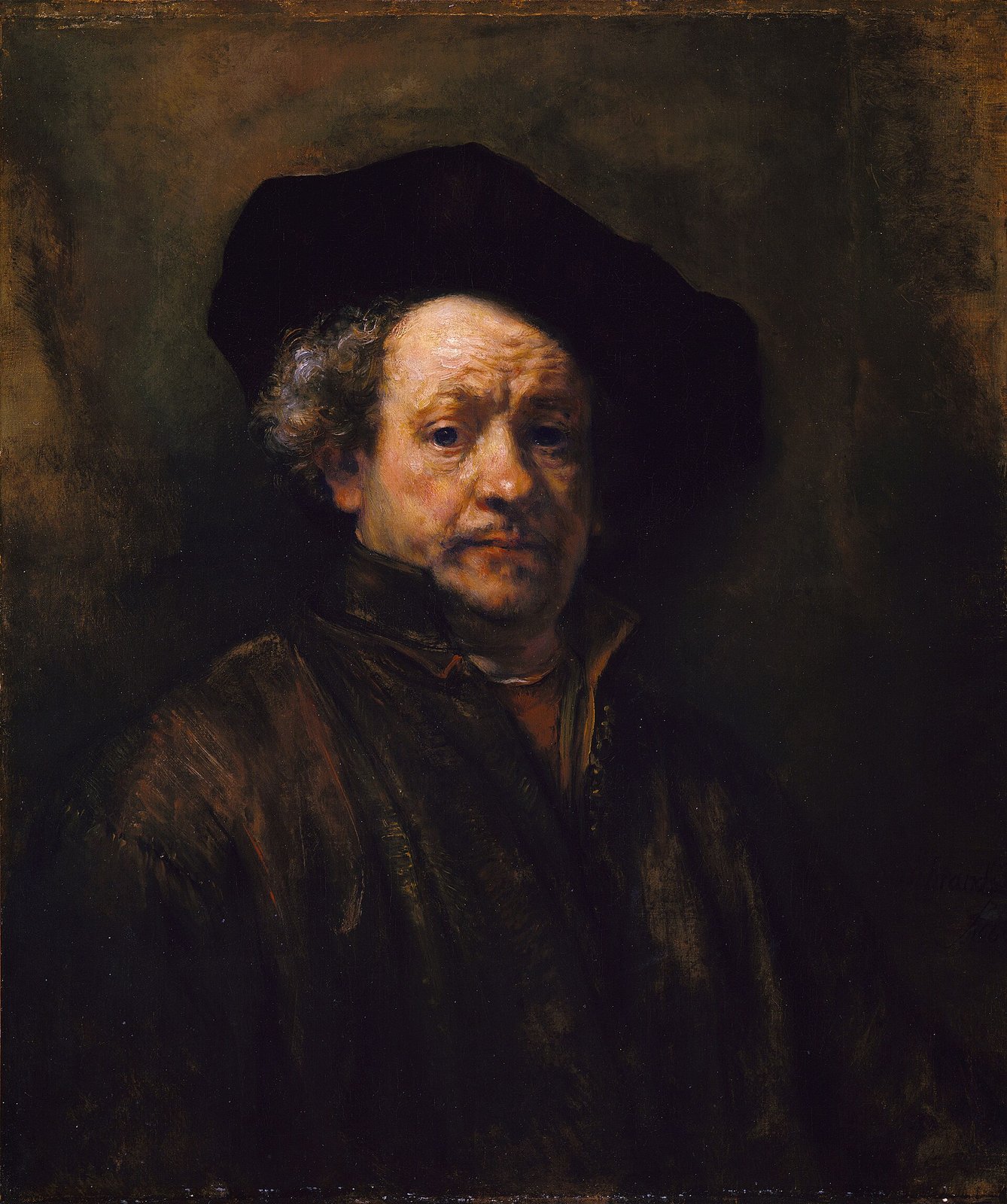
The light in this portrait is not depicted. It is built. Where light strikes — the forehead, the ridge of the nose, the upper cheek — the paint stands off the canvas in ridges thick enough to cast their own shadows. Where the face turns away, the paint thins to a translucent film with the ground showing through it. Illumination here is a material fact before it is an optical one: thickness equals light.
The face is constructed in planes, not features. There is no drawn line around the eye, the nose, the mouth — each form exists because one value plane ends and another begins. The features are consequences of the tonal structure, never additions to it.
Then a worksheet: “Find the thickest passage of paint in the reproduction. Which plane of the face does it state, and where exactly does that plane end — at a line, or at a meeting of values?”
- Palette
- yellow ochre, ivory black, titanium white — nothing else.
- Scale
- 30×30 cm, board or canvas.
- Duration
- 40 minutes, timed.
- Set a single light source on your face at roughly 45 degrees. Mix three values before touching the support: shadow, half-tone, light.
- Block the entire shadow mass of the head first, thin — the ground must remain visible through it.
- State each lit plane with one loaded stroke of the light value. One stroke per plane.
- Where a plane turns, set the new value directly against the old one and leave the join alone.
- At 40 minutes, stop. Unresolved edges remain unresolved.
ConstraintThickness follows light. Loaded paint is permitted only in the lit planes; the shadow stays thin enough to see the ground through it for the full 40 minutes.
One entry unlocks each day.
There is nothing to binge and nothing to catch up — the pace is the practice. The sequence runs from the Renaissance to the present: 365 days, each built on a significant work, most reproduced from museum open-access collections, some — where reproduction rights end — carried by the analysis alone.
Day by day, the journal becomes a record: what you made, what resisted, what changed. Your reflections and photos stay on your device.